
For social studies in grades 1–3, students continue to expand on their community-building skills through classroom and individual discussions, literacy-building activities, and game play. Students will model and describe social studies themes using traditional methods and multimedia with interactive projects such as map-making, choreography, and 3-D modeling.
In first grade, students continue to hone the community-building skills they developed in Kindergarten, such as active listening and thoughtful communication. After Morning Meeting, students also spend time on the Natural Playground, where they work together to build play structures, create new games, and negotiate rules. Throughout first grade, teachers guide students through productive conversations around setting boundaries, taking care of each other, and maintaining the physical environment.
Through read-alouds, discussions, literacy-building activities, and games, students explore essential questions such as, “How does being part of a diverse community make us stronger?” “How can we help others appreciate our special location? and “How can we work together for the good of the community?” Example projects include songwriting, dance choreography, storybook making, and multimedia models.
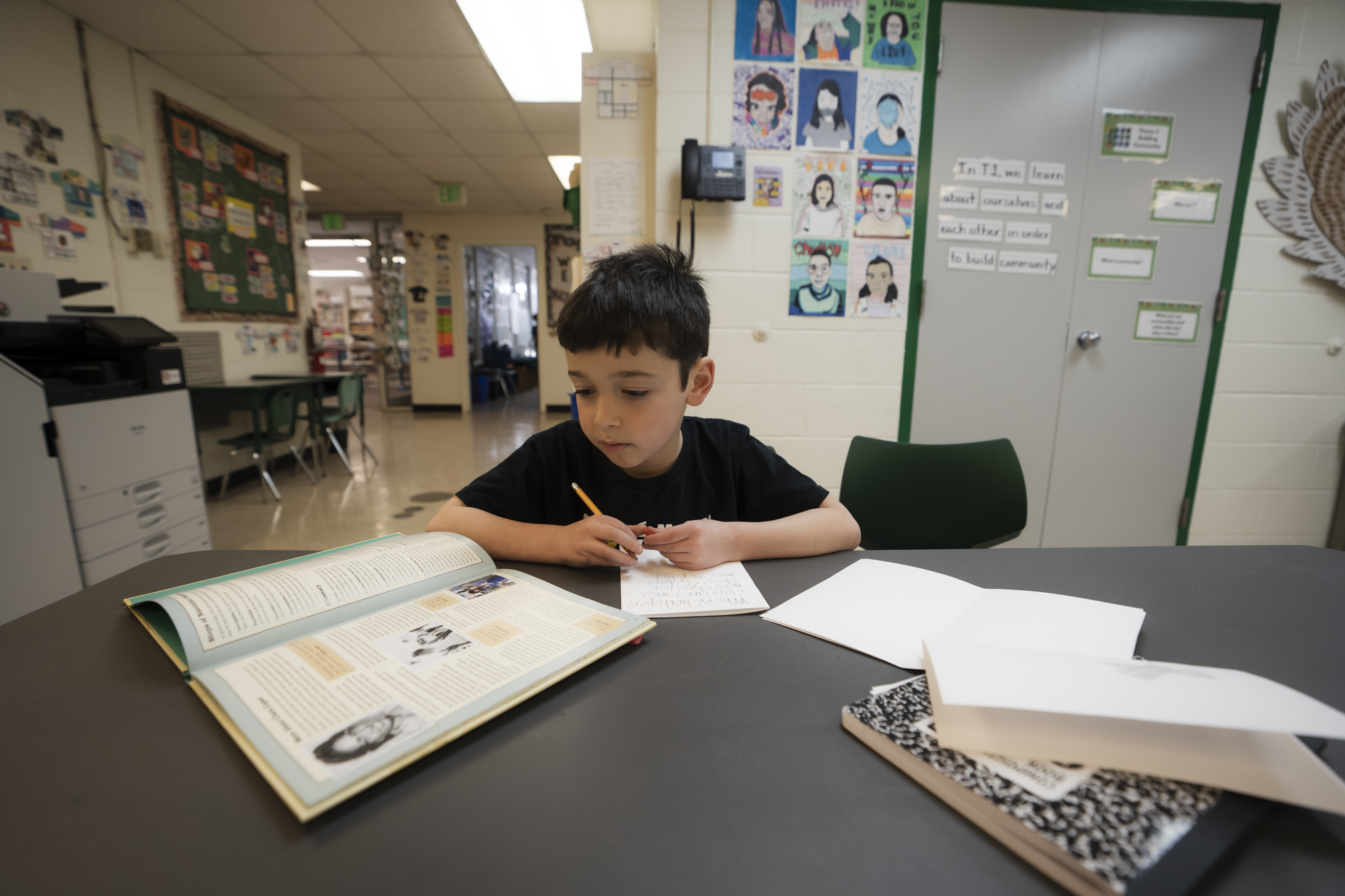
In second grade, students develop greater independence in their classroom community. Students actively use the classroom guidelines they help cocreate at the beginning of the year to maintain a compassionate learning environment. Using this model, students begin to build a foundational understanding of self-government and community-care.
Through read-alouds, discussions, literacy-building activities, and games, students explore essential questions such as, “How can we work together to meet community needs and wants?” “How can we respond to our changing landscape?” and “How can we innovate to improve the world around us?” Example projects include map-making, 3-D models of different landscapes, and models of new technological innovations.
With the guidance of their teacher, students in third grade gradually assume ownership of classroom routines. They begin the year by co-creating classroom guidelines as well as helping to set up the physical classroom environment. By the end of the year, students develop a profound sense of self-government and community-care.
Through read-alouds, and class discussions, literacy-building activities, and games, students explore essential questions such as, “How can we act as global citizens?” “How can we honor and respect our many cultures?” and “How can we take steps toward equality and justice?” Example projects include play-writing and performance, 3-D models of civil rights heroes, and designing nonfiction books for children.